
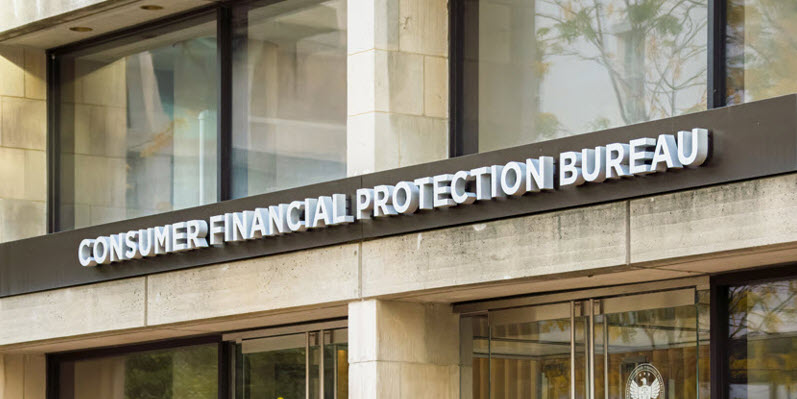
The Consumer Financial Protection Bureau (CFPB) is asking for public input on whether it should revise the definitions of “larger market participants” in four key sectors: debt collection, automobile financing, consumer reporting, and international money transfers.
In notices published in the Federal Register, the bureau expressed concern that the current thresholds may not strike the right balance between regulatory benefits and compliance burdens for businesses. It also noted that existing rules might be diverting agency resources toward determining supervisory eligibility rather than focusing on oversight priorities.
The CFPB has issued an advance notice of proposed rulemaking for each of the four markets.
Debt Collection
The bureau is requesting data to help evaluate possible changes to how it defines larger participants in the consumer debt collection market. Currently, under the Consumer Debt Collection Larger Participant Rule (published Oct. 31, 2012), a nonbank covered person is considered a larger participant if they have more than $10 million in annual receipts from consumer debt collection activities.
The bureau pointed out that the $10 million threshold was set using Small Business Administration (SBA) size standards from 2013, when a debt collection agency was considered a small business if its annual receipts were less than $7 million. Since then, the SBA threshold has increased to $19.5 million. As a result, some agencies meet the CFPB’s definition of a larger participant even though they qualify as small businesses by SBA standards. Industry consolidation and changes in annual receipts are among the factors prompting the review.
Consumer Reporting
The CFPB is also reviewing the larger participant definition in the consumer reporting market, which was last updated on July 20, 2012. Currently, a nonbank covered person qualifies if they have more than $7 million in annual receipts from consumer reporting activities.
Automobile Financing
For the automobile financing market, the current rule—published June 30, 2015—defines a larger participant as a nonbank covered person with at least 10,000 aggregate annual originations. The CFPB is seeking feedback on whether this threshold remains appropriate.
International Money Transfers
In the international money transfer market, the rule—effective Sept. 9, 2014—defines larger participants as nonbank covered persons with at least one million aggregate annual international money transfers. The bureau is requesting comments on whether that threshold should be updated.
How to Comment
The CFPB is accepting comments on all four notices through Sept. 22, 2025. Stakeholders can review the detailed questions and submission instructions in the Federal Register notice for each market, available on the government website HERE.
Sign Up for the Twice Monthly Newsletter
Just enter your email address at the top orange bar at:
Collection Compliance Experts – “The Power of Expertise: Oversight Perfected”
It’s that easy! Twice a month – we provide blog updates and Resources for the Collection and Industry Professional.
Your email is just for this newsletter. We never sell your information. No fee. Opt-out at any time.

Author: Jennifer Evancic
Jennifer.Evancic@ResourceManagement.com
Jennifer Evancic is a third-party auditor valued by creditors and large organizations for her knowledge in call monitoring within the collections industry. With meticulous attention to detail and a firm grasp of regulatory requirements, she ensures compliance with clients’ criteria and state and federal regulations.
Jennifer audits collections calls, ensuring they meet client-specific criteria and comply with regulations, providing valuable insights and maintaining industry standards.
Beyond her auditing responsibilities, Jennifer takes the lead in organizing and facilitating monthly call calibrations. These sessions serve as a collaborative forum where clients and their vendors come together to discuss call monitoring results and address any findings or areas for improvement. Jennifer’s guidance fosters open communication and ensures alignment between clients and vendors, driving continuous improvement in collections practices.
Jennifer stays up-to-date with compliance and industry best practices by participating regularly in peer meetings, regulatory updates and industry webinars. This keeps her informed about emerging issues and ensures she remains a knowledgeable leader in collections compliance.